
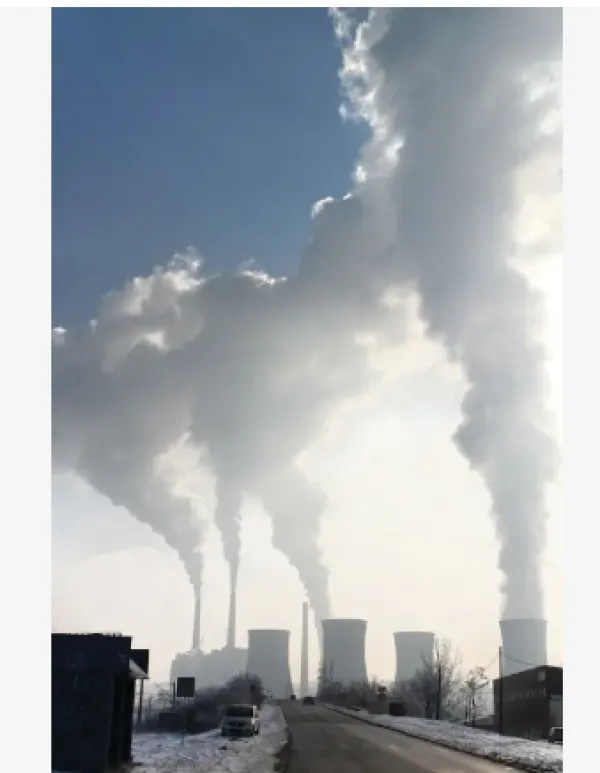
On May 28, Freepoint Eco-Systems notified the Ohio EPA and Freepoint employees that it would be shutting down its Central Ohio plastic incineration facility, located outside of Hebron in Licking County. According to Oil and Gas Watch’s database, Freepoint Eco-Systems was one of only seven operating plastic pyrolysis facilities in the entire United States.
The Hebron facility’s troubled record dates back to the fall of 2024, shortly after the facility first began processing plastic. Since then, employee complaints of exposure to fine plastic dust and community concerns about constant black plumes of smoke prompted multiple Ohio EPA and OSHA investigations into the pyrolysis facility.
“Living within a mile of Freepoint, I am always concerned about the air quality in our neighborhood. We would occasionally get a smell of burning plastic and see black smoke coming from the stacks,” said Lori Swihart, Hebron resident. “While I don’t wish any business to close their doors, my husband and I are pleased to hear that they are closing indefinitely due to so many violations. We believe it is a victory for the health, safety and well-being of our community and township.”
News of the shutdown came roughly a month after the facility’s fifth—and latest—Notice of Violation, in which the Ohio EPA cited Freepoint Eco-Systems for failing to produce enough pyrolysis oil to qualify for its recycling exemption for three consecutive quarters.
In a May 11 email to Buckeye Environmental Network staff, an Ohio EPA spokesperson stated, “Without meeting the 70 percent threshold, the facility is now classified as a municipal waste combustion unit and subject to more stringent federal regulations under 40 CFR Part 60, Subpart AAAA.”
However, in a statement to Plastics News published May 26, the Ohio EPA contradicted this statement, saying the agency had not reclassified Freepoint as an incinerator.
“This voluntary shutdown is a win for public health and our environment, but it is outrageous that the Ohio EPA publicly walked back its plan to reclassify the facility as an incinerator. It is their responsibility to protect Ohioans by enforcing regulations,” said Becca Pollard, executive director of Buckeye Environmental Network.
At the time of Freepoint’s announcement, the Ohio EPA was settling a formal enforcement case against the facility for continued noncompliance with environmental standards. According to the Ohio EPA, the facility malfunctioned 27 times in the first 5 months of 2026. Freepoint failed to immediately notify the Ohio EPA about 8 of these events, as is required by Ohio law.
“Freepoint’s decision to shut down operations rather than comply with the Clean Air Act shows why the plastic industry has been lobbying so hard to remove pyrolysis from Section 129 of the Clean Air Act: pyrolysis is a speculative technology that depends on misregulation to be economically viable. This greenwashing scheme has a human cost, and it is unacceptable,” said Cat Adams, petrochemicals organizer for Buckeye Environmental Network.
Freepoint Eco-Systems has plans to build its second plastic pyrolysis facility in Eloy, Arizona. However, residents of Eloy have raised concerns about the proposal, pointing towards Freepoint’s history of pollution in Ohio.
"Freepoint Ecosystems' repeated permit violations, not to mention their failure to achieve their ‘recycling’ claims in Ohio, only makes it even more concerning that they are still proposing to build an even bigger facility in Eloy, Arizona,” said Ralph Atchue, resident of Eloy. “As Freepoint Ecosystems is halting operations in Ohio, they should also retract their request for an updated air permit in Arizona and stop any plans to break ground there.
Buckeye Environmental Network (BEN) works to support grassroots environmental justice organizing and to protect Ohio’s native forests. Working with grassroots community groups, we provide activists the tools and support needed to mobilize their communities for effective action against the harms caused by corporate assaults. We foster public pressure on government and corporations to protect communities and Ohio’s environment. Through community action and ecological protection, we seek fundamental changes that improve our relationships with each other and the land.